The Cybersecurity course is designed to provide learners with the essential knowledge and practical skills required to protect systems, networks, and digital data from cyber threats. This comprehensive program introduces students to the fundamentals of information security, ethical hacking, risk management, and network defense strategies. With the growing demand for skilled security professionals, the course focuses on real-world scenarios to help learners understand how cyber attacks happen and how to prevent them effectively.
Cybersecurity Certification Key Features
Learn the latest cybersecurity concepts including ethical hacking, network security, risk management, and threat detection aligned with current industry standards.
Practice real-world scenarios through virtual labs, simulations, and live exercises that help you understand how cyber attacks happen and how to prevent them.
Get exposure to popular security tools and techniques used for vulnerability assessment, penetration testing, and system protection.
Learn from experienced cybersecurity professionals who provide practical insights, mentorship, and guidance throughout the training.
Analyze real cyber incidents and security challenges to develop problem-solving skills and understand modern threat landscapes.
Receive certification guidance, resume support, and interview preparation to help you start or advance your career in cybersecurity roles.
Cybersecurity training offers valuable advantages for individuals who want to build a strong and future-ready career in the digital world. One of the biggest benefits is gaining the ability to protect systems, networks, and sensitive data from cyber threats. As businesses increasingly depend on technology, the demand for skilled cybersecurity professionals continues to grow across industries such as banking, healthcare, IT, e-commerce, and government sectors. By learning how to identify vulnerabilities, prevent attacks, and secure digital environments, learners become an essential part of modern organizations.
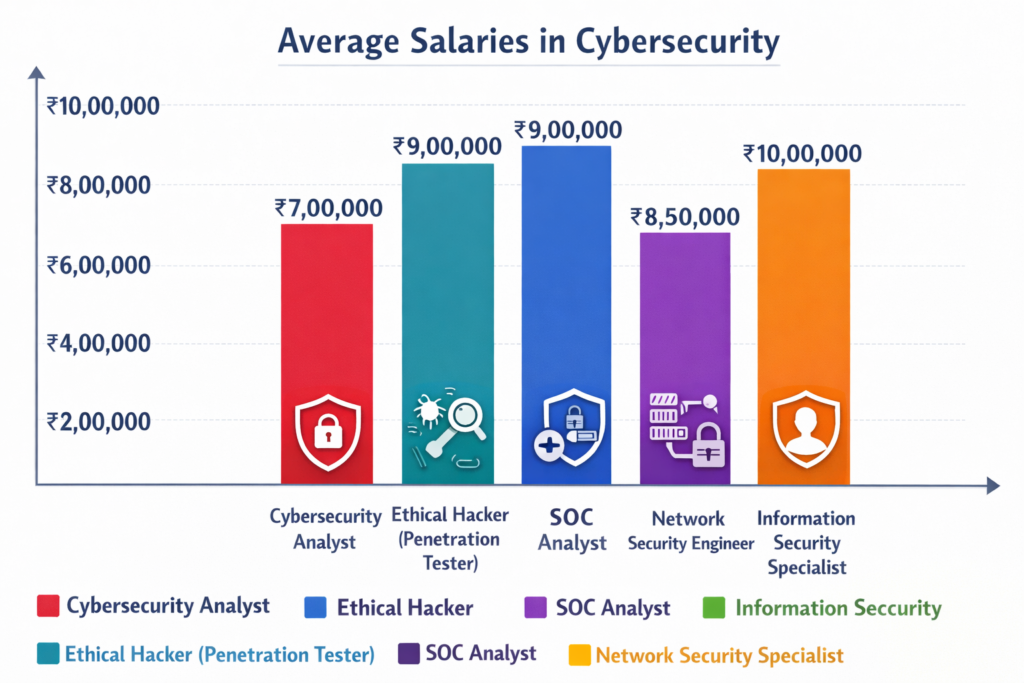
Designation - Cybersecurity Analyst
Annual Salary
Hiring Companies
Designation - Ethical Hacker
Annual Salary
Hiring Companies
Designation - SOC Analyst
Annual Salary
Hiring Companies
Designation - Network Security Engineer
Annual Salary
Hiring Companies
Designation - Information Security Specialist
Annual Salary
Hiring Companies
Designation - Security Consultant
Annual Salary
Hiring Companies
Designation
Annual Salary
Hiring Companies
Certification Course Curriculum
Eligibility
Familiarity with basic networking concepts like IP address, internet protocols, and system usage can be helpful but is not mandatory. Beginners are welcome — most cybersecurity programs start with foundational concepts before moving to advanced topics.
Pre-requistes
No advanced experience is required, but learners should be open to exploring ethical hacking techniques and security software. Knowledge of internet basics such as IP addresses, routers, and network communication will make security topics easier to understand.
Course Content
Module 1 - Introduction to Cybersecurity
Module 2 - Networking Fundamentals
Module 3 - Operating System Security
Module 4 - Ethical Hacking & Penetration Testing
Module 5 - Cryptography & Data Protection
Module 6 - Web & Application Security
Module 7 - Security Tools & Monitoring
Module 8 - Incident Response & Risk Management
Module 9 - Practical Labs & Real-World Projects
Module 10 - Career Preparation & Certification Guidance
Contact Us
02269719625
Request More Information
Cybersecurity Course Advisor
Rahul Sharma
Senior Cybersecurity Trainer
The Senior Cybersecurity Trainer leads the core technical modules, including ethical hacking, network security, vulnerability assessment, and threat analysis. With strong industry experience in protecting digital systems and managing cyber risks, the trainer focuses on practical learning through live demonstrations, real attack simulations, and hands-on labs.
Sneha Kapoor
Network Security & Risk Management Expert
The Network Security and Risk Management Expert specializes in teaching operating system security, cryptography basics, incident response, and compliance practices. This trainer helps learners develop strong foundations in monitoring threats, analyzing risks, and maintaining secure infrastructures.
Cybersecurity Exam & Certification FAQs -
How is the cybersecurity exam conducted?
The exam is usually a combination of theoretical tests, practical lab assessments, and project evaluations. Students may need to demonstrate skills such as identifying vulnerabilities, analyzing threats, or applying security techniques.
What certification will I receive after completion?
Learners typically receive a course completion or professional certification that validates their knowledge in cybersecurity fundamentals, ethical hacking basics, and network security practices.
Is prior exam experience required?
No prior certification exam experience is needed. The training usually includes preparation sessions, mock tests, and guidance to help beginners feel confident.
Are practical labs part of the certification process?
Yes, many cybersecurity programs include hands-on lab performance as part of the assessment to ensure students can apply concepts in real-world scenarios.
Does certification help with job opportunities?
Certification demonstrates verified cybersecurity skills, helping you stand out to employers and improving your chances of securing roles like Security Analyst, SOC Analyst, or Ethical Hacking Associate.
Why Join this Program
High-Demand Career Opportunities
Cybersecurity professionals are needed across industries to protect digital systems and sensitive data. This program helps you build job-ready skills for roles like Security Analyst, Ethical Hacker, and SOC Associate.
Practical Hands-On Learning
Gain real-world experience through simulated cyber-attack scenarios, security labs, and live demonstrations. The training focuses on applying concepts, not just learning theory.
Learn Modern Security Tools & Techniques
Understand how professionals detect threats, secure networks, and manage risks using industry-relevant tools, ethical hacking basics, and defense strategies.
Certification & Career Support
Receive structured exam preparation, portfolio guidance, and career mentoring to help you confidently enter the cybersecurity field and grow professionally.