Cinematography Course is a comprehensive training program designed to teach students the art and technical skills of professional filmmaking. This course covers camera handling, lighting techniques, composition, lens selection, and visual storytelling to help learners create cinematic-quality videos. Through hands-on practice and real-world projects, students gain practical experience in planning shots, managing lighting setups, and capturing visually engaging scenes.
Cinematography Certification Key Features
Learn practical camera handling skills including exposure control, framing, camera movements, and real-time shooting techniques.
Students practice studio lighting, natural light control, mood creation, and using modifiers like softboxes, reflectors, and gels.
Develop strong framing skills using composition rules, shot planning, and storytelling through visuals.
Explore how different lenses affect mood and storytelling.
Get introduced to color theory, cinematic tones, and basic grading workflows.
One of the biggest benefits is hands-on practical learning. Instead of only studying theory, students work with cameras, lighting equipment, and real shooting environments. This practical exposure helps you understand how professional film sets operate, improving both technical skills and teamwork abilities. You learn how to handle challenges like low-light conditions, camera movement, and framing decisions — all essential for real productions.
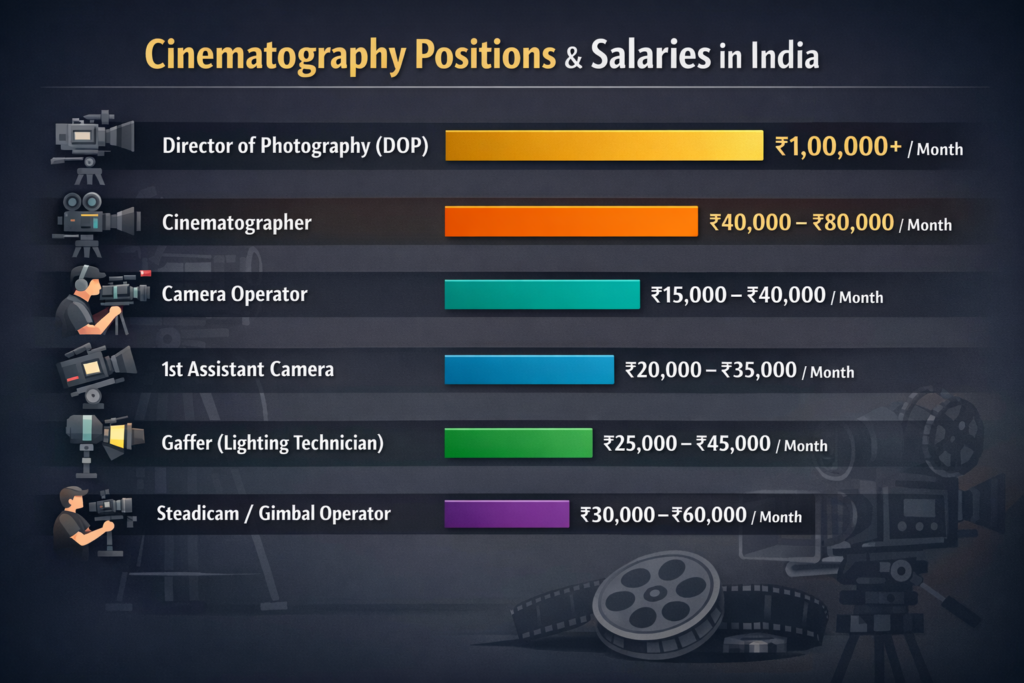
Designation - DOP / Cinematographer
Annual Salary
Hiring Companies
Designation - Camera Operator
Annual Salary
Hiring Companies
Designation - 1st Assistant Camera
Annual Salary
Hiring Companies
Designation - 2nd Assistant Camera
Annual Salary
Hiring Companies
Designation - Storyboard Artist
Annual Salary
Hiring Companies
Designation
Annual Salary
Hiring Companies
Certification Course Curriculum
Eligibility
Open to students who have completed 10th, 12th, or equivalent education. No specific academic stream is required. Anyone interested in filmmaking, photography, or visual storytelling can join — even with no prior experience.
Pre-requistes
Familiarity with photography or video shooting basics can make learning easier, though beginners can start from scratch. An eye for detail, framing, lighting, and storytelling enhances learning and improves cinematic results.
Course Content
Module 1 - Introduction to Cinematography
Module 2 - Camera Operation & Settings
Module 3 - Lighting Techniques
Module 4 - Composition & Framing
Module 5 - Lenses & Depth of Field
Module 6 - Camera Movement & Stabilization
Module 7 - Color Theory & Basic Color Grading
Module 8 - Visual Storytelling & Shot Planning
Module 9 - Introduction to Video Editing Basics
Module 10 - Introduction to Video Editing BasicsPractical Projects & Portfolio Development
Contact Us
02269719625
Request More Information
Cinematography Course Advisor
Rohan Deshpande
DOP & Lead Cinematography Trainer
Rohan Deshpande is a professional cinematographer with extensive experience in films, advertisements, and digital productions. He specializes in camera operation, lighting design, and cinematic storytelling. His training approach focuses on practical on-set learning, helping students understand professional workflows, shot composition, and advanced camera movement techniques used in the industry.
Rakesh Nair
Visual Storytelling & Lighting Instructor
Rakesh Nair is a creative cinematography instructor known for his expertise in lighting aesthetics and visual composition. He guides students in developing cinematic vision through framing, color tones, and mood creation. His sessions combine theory with hands-on projects, enabling learners to build confidence in real-world shooting environments and create strong portfolio work.
The certification exam is a final assessment designed to evaluate your practical skills, creative understanding, and technical knowledge gained during the course. It may include a mix of theory questions, project evaluation, and hands-on shooting assignments.
What type of exam format is used?
Most institutes follow a practical-based evaluation, which can include camera handling tests, lighting setup tasks, shot composition exercises, and a final project or short film submission.
Do I need to complete a project to get certified?
Yes, students are usually required to complete a final cinematography project or portfolio piece. This helps demonstrate real-world skills and creative storytelling ability.
What certification will I receive after completion?
After successfully passing the exam and completing all modules, students receive a Cinematography Course Completion Certificate that validates their training and skills.
Is the certification useful for jobs or freelancing?
Yes, certification helps showcase your professional training and portfolio, making it easier to apply for roles like cinematographer, videographer, camera operator, or content creator.
Why Join this Program
Practical On-Set Learning Experience
Gain hands-on experience with professional cameras, lighting setups, and real shooting environments to understand how film production works.
Learn Cinematic Storytelling Techniques
Develop creative skills in framing, composition, and visual storytelling that help transform simple scenes into cinematic visuals.
Portfolio & Career Development
Work on short films and creative projects to build a strong showreel, helping you apply for jobs, freelance work, or content creation opportunities.
Industry-Focused Skills & Creative Growth
Learn modern cinematography techniques, camera movement, and lighting strategies that make you job-ready in the media and entertainment industry.